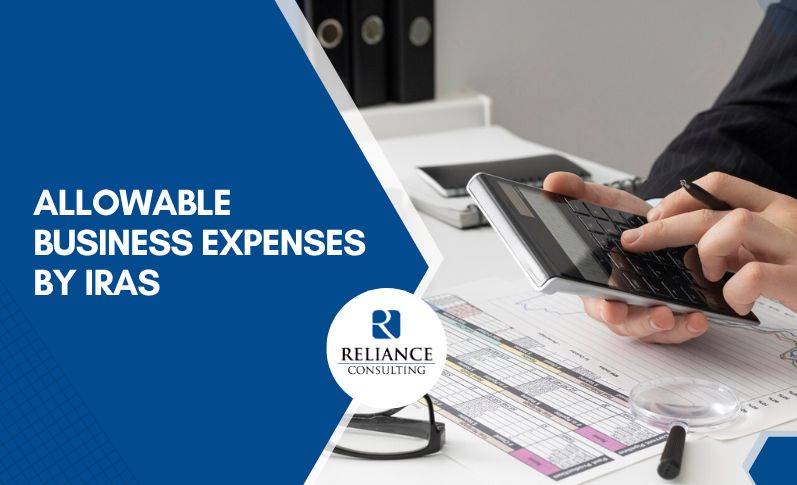
As a company or business owner, it is crucial that you are aware of the allowable business expenses by the Inland Revenue Authority of Singapore or IRAS. Knowing and understanding these guidelines benefits your business’s financial health and compliance.
Business Expenses and Deductions
Business expenses are the costs of doing business, such as rent, supplies, and wages. These expenses can be deducted from your business income to reduce your tax liability.
You should note that only expenses deemed “allowable” by IRAS are eligible for deduction.
Here is an illustration.
If you have an income of SGD 95,000, and your business expenses amount to SGD 25,000. But the breakdown is as follows:
- Deductible Business Expenses = SGD 10,000
- Non-Deductible Business Expenses = SGD 15,000
The taxable income would be income minus deductible expenses, SGD 95,000 – SGD 10,000 = SGD 85,000.
General Rules for Claiming Business Purposes
The following are the ground rules for deducting business expenses from your taxes to make sure you are only claiming legitimate costs related to your business operations.
Expenses Must Be Incurred
This means you have already committed to the expense and have a legal obligation to pay even if you haven’t settled the bill yet. It’s about the commitment, not the cash flow.
Expenses Must Be Business-Related
There needs to be a clear link between the expense and your business activity. You should be able to justify how the expense helps you generate income.
Personal expenses like groceries or vacations are not deductible, as they don’t contribute to your business earnings.
Capital Expenses Are Treated Differently
Big-ticket items like equipment or property (capital expenses) are not deducted all at once. Instead, you claim depreciation over time, reflecting the asset’s gradual wear and tear. This is done through capital allowances.
Keep Those Receipts!
Accurate record-keeping is important. You will need invoices, receipts, and other documents to prove your expenses to the tax authorities. Hang onto these records for at least five years.
Examples of Allowable/Deductible Expenses
Employee-Related Expenses
- Regular wages, any bonuses paid for performance, and allowances like transport or meal allowances. These must be necessary for the business and reasonable in amount.
- Employers in Singapore are required to make contributions to the Central Provident Fund (CPF) for their employees, which are tax-deductible.
- You can deduct medical expenses for your employees, including medical insurance premiums. However, there are limits on the amount you can deduct.
- Expenses incurred for training your employees to improve their skills and knowledge are generally deductible. This can include courses, workshops, and seminars.
- If you have to retrench employees, the benefits you pay to them are deductible.
Rent and Utilities
- The rent you pay for your office space is a deductible expense.
- The cost of utilities used in your business is deductible.
- Property tax paid on your business premises is also deductible.
Office Supplies and Expenses
- Stationery, including items like paper, pens, and other office supplies.
- The cost of computer hardware and software can be deductible, but may be subject to capital allowances (depreciation) instead of being fully deductible in the year of purchase.
- Internet and telephone charges are considered essential business expenses and are deductible.
Marketing and Advertising
- You can deduct the costs of advertising your business, whether online, in print, or through other media.
- Expenses related to public relations activities are also deductible.
- The costs of developing and maintaining your business website are deductible.
Insurance Premiums
- Premiums paid for fire insurance for your business property are deductible.
- General liability insurance protects your business from claims of bodily injury or property damage.
- Professional indemnity insurance covers professionals against claims of negligence.
Bad Debts
- You can deduct bad debts if you have exhausted all reasonable means to recover them and they meet certain criteria set by IRAS.
Depreciation
- Depreciation allows you to claim a tax deduction for the wear and tear of assets like computers, machinery, and vehicles over their useful life. Singapore uses a system of capital allowances, which are similar to depreciation.
Repairs and Maintenance
- Expenses for repairs and maintenance to keep your business assets in good condition are deductible.
- Repairs are deductible, while improvements (which enhance the asset’s value or lifespan) are considered capital expenditures and are usually depreciated over time.
Professional Fees
- Fees paid for accounting and auditing services are deductible.
- Legal fees incurred for business purposes are also deductible.
- Fees paid to tax consultants for advice and assistance with tax matters are deductible.
Travel Expenses
- Costs of transportation for business purposes, such as airfare, taxi fares, and train tickets, are deductible.
- Hotel costs incurred while travelling for business are deductible.
- You can deduct a reasonable amount for meals while on business travel, but there are conditions and limits.
Research and Development (R&D) Costs
Expenses related to research and development activities undertaken by your business are generally deductible. This can include salaries of R&D staff, materials used in research, and other related costs.
Specific Industries and Deductible Expenses
The allowable expenses we’ve discussed above are applicable to most industries. Now, let’s discuss specific industries and what expenses can be deducted from their income.
Manufacturing
- Raw materials and consumables used in production
- Factory overheads (e.g., electricity, water, rent)
- Depreciation of plant and machinery
- Research and development costs for new products and processes
Technology
- Software licences and subscriptions
- Cloud computing costs
- Website development and maintenance
- Research and development costs for new technologies
Retail
- Cost of goods sold (COGS)
- Inventory costs like storage and insurance
- Shop rental and utilities
- Sales and marketing expenses
Construction
- Cost of construction materials
- Subcontractor fees
- Equipment rental and maintenance
- Site preparation costs
Food and Beverage (F&B)
- Cost of food and beverages
- Kitchen equipment and maintenance
- Restaurant rental and utilities
- Staff salaries and training
Healthcare
- Medical supplies and equipment
- Salaries of medical professionals
- Rent and utilities for clinics and hospitals
- Insurance premiums such as medical malpractice
Education
- Salaries of teachers and staff
- Educational materials and resources
- Rent and utilities for school buildings
- Student transportation costs
Financial Services
- Salaries of financial professionals
- Office rent and utilities
- Regulatory compliance costs
- Technology infrastructure costs
Claiming Business Expenses
When filing your Form C-S or Form C, you will need to declare your business income and deduct allowable expenses. The form already provides sections to categorise different types of expenses.
Common Mistakes to Avoid While Claiming
- Claiming personal expenses
- Insufficient documentation
- And incorrect categorisation
What To Do When Unsure
If you are unsure about which expenses are claimable or you simply need help with the process to reduce business expenses, consider consulting a tax professional. Corporate Services Singapore is not only an expert in company incorporation but also tax advisory and other corporate concerns.
We make sure that every business and company in Singapore is properly guided and fully complies with regulations set by IRAS.
Talk to us today!