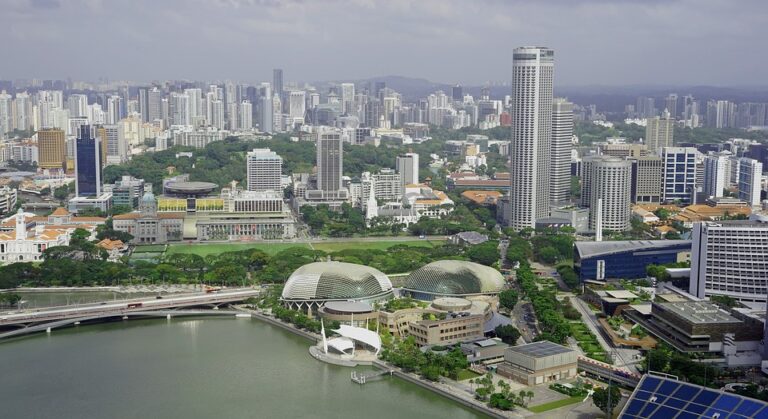
As Singapore emerges from the shadows of the pandemic, businesses are eagerly seeking insights to guide their strategies in the dynamic economic landscape. The UOB Business Outlook Study 2024 and recent economic forecasts shed light on the opportunities and challenges that lie ahead for businesses in Singapore.
Let’s dive deeper into the findings and forecasts so you can gain valuable insights and strategies to adapt and drive in the face of challenges and seize the opportunities that await in the years to come.
Singapore’s Overall Economic Outlook for 2024
The city-state’s economy is poised for a promising year in 2024, with the Monetary Authority of Singapore’s survey of forecasters projecting a GDP growth of 2.4%, up from the previous estimate of 2.3%. This upward revision is driven by the expected strong performance of the manufacturing sector, which is forecast to grow at an impressive 4%, a significant increase from the earlier projection of 2.3%.
UOB Business Outlook Study (BOS) 2024
The UOB Business Outlook Study 2024 reveals that nearly 8 in 10 businesses in Singapore view the current business environment as positive, with ‘Tech, Media & Telecom’ being the most optimistic. Around 7 in 10 businesses expect improved business performance in 2024, with the ‘Tech, Media & Telecom’ and ‘Industrials, Oil & Gas’ sectors anticipating the most significant improvements.
Swiftonomics
The much-anticipated Taylor Swift Eras Tour was also expected to boost Singapore’s Economy in the first quarter of 2024. Economists estimated that the concerts would have contributed between 300 million and 400 million SGD to the country’s GDP, adding around 20 basis points to the first-quarter growth. This “Swiftonomics” effect was expected to propel Singapore’s Q1 GDP growth to 2.9%, according to a Bloomberg report.
GDP Forecast
Looking further ahead, Singapore’s GDP is forecast to reach a new peak of 654.71 billion U.S. dollars by 2029, marking a 24.66% increase from 2024. This steady growth trajectory underscores the city-state’s economic resilience and its ability to navigate the challenges posed by the ever-changing global landscape.
Businesses to be vigilant and adaptable
Even if the overall economic outlook for Singapore in 2024 is positive, businesses must remain vigilant and adaptable to the challenges that may arise. The UOB Business Outlook Study 2024 highlights that inflation remains a concern, with over 8 in 10 businesses having been impacted by high inflation in 2023. Rising operational costs, high manpower costs, and interest rates are among the top factors affecting businesses in Singapore.
Sectoral Growth Projections and Sentiments
The manufacturing sector, which accounts for over 20% of Singapore’s GDP, is expected to be a key driver of growth in 2024. The Monetary Authority of Singapore’s survey of forecasters has revised the growth projection for the manufacturing sector to 4%, a notable increase from the previous 2.3%. This indicates a strong recovery and growth potential for the manufacturing industry.
The UOB BOS 2024 also reveals that the ‘Industrials, Oil & Gas’ and ‘Tech, Media & Telecom’ are among the most interested in overseas expansion. This suggests that these sectors are actively seeking growth opportunities beyond Singapore’s borders. On the other hand, the survey indicates that the outlook for the Wholesale & Retail Trade and Accommodation & Food Services sectors has been revised lower. This may be attributed to the lingering effects of the pandemic on consumer behaviour and tourism.
‘Consumer Goods’, ‘Manufacturing & Engineering’, and ‘Community & Personal’ have the highest sustainability implementation, covering 38% of businesses that have implemented sustainable practices in 2022 and 2023. In terms of Expenditures on digitalisation, the higher spending sectors are ‘Industrials, Oil & Gas’ and ‘Construction & Infrastructure’. The number of businesses that succeeded has declined from the previous year due to the high cost of solutions, lack of expertise among employees, and high cost of employing tech talent.
Inflation Outlook
MAS’s survey of forecasters has painted a more optimistic picture compared to earlier projections. It now expects headline inflation to come in at 3.1%, lower than the previous forecast of 3.4%. This downward revision suggests that inflationary pressures are expected to ease this year.
However, it is important to note that the MAS core inflation, which strips out the prices of accommodation and private transport, is forecast to remain unchanged at 3%. This indicates that underlying inflationary pressure may persist in certain sectors of the economy.
Aside from the statistics showing that over 8 in 10 businesses in Singapore were impacted by high inflation last year, the UOB BOS 2024 also highlights that inflation has led to an increase in the cost of operation for over 6 in 10 businesses. Consequently, businesses are adopting various strategies to combat inflation, such as improving productivity, increasing selling prices, and implementing cost-cutting measures.
Labour Market Outlook
The UOB BOS 2024 also presents the labour market challenges faced by businesses in Singapore. The study identifies high manpower costs as one of the top factors impacting businesses in 2023, with 29% of surveyed businesses citing this as a major concern.
To address labour market challenges and drive business growth, the study reveals that businesses are focusing on strategies such as re-skilling and upskilling their existing talent. Around 25% of businesses surveyed plan to invest in employee training as part of their business priorities for the next 1-3 years. This highlights the importance of human capital development in navigating the evolving and complex labour market landscape.
The study also indicates that businesses are leveraging digitalisation and automation to address labour market challenges and improve productivity. The same percentage of businesses (25%) plan to adopt digital solutions to automate processes.
The labour market outlook for Singapore this year will likely be shaped by the interplay of various factors, including the pace of economic recovery, the effectiveness of businesses’ strategies to adapt to the changing landscape, and the government’s policies to support employment and skills development.
Monetary Policy Stance
Singapore’s unique approach to monetary policy, which focuses on managing the exchange rate rather than interest rates, plays a critical role in navigating economic challenges and maintaining stability. The Monetary Authority of Singapore (MAS) sets the policy band for the Singapore Dollar Nominal Effective Exchange Rate (S$NEER), allowing the currency to appreciate or depreciate against a trade-weighted basket of currencies from Singapore’s major trading partners.
According to the MAS survey of forecasters, economists do not expect changes to Singapore’s monetary policy in the April 2024 review. This suggests that the current policy stance is deemed appropriate in light of the prevailing economic conditions and the revised inflation outlook.
The decision to maintain the current monetary policy stance can be attributed to several factors.
- Singapore’s headline inflation forecast for 2024, revised downward from 3.4% to 3.1%, indicates that inflationary pressures are expected to moderate this year. These reduced inflationary expectations may alleviate the need for a more aggressive monetary policy response.
- The stable MAS core inflation forecast (at 3%) may justify maintaining the current monetary policy stance to ensure price stability.
- The expected economic growth is 2.4% this year and 2.5% in 2025. This indicates a gradual recovery and a relatively stable economic and business outlook. This balanced growth projection may not warrant significant adjustments to the monetary policy stance.
Note that the MAS survey reflects the views of economists and not the official stance of the central bank. The actual monetary policy decision will be based on a comprehensive assessment of various economic indicators, global developments, and the MAS’s own analysis.
Implications and Recommendations for Businesses
Identify industries with the strongest growth prospects
The ‘Tech, Media & Telecom’ and ‘Industrials, Oil & Gas’ sectors are the most optimistic about the current business environment and future growth prospects, so businesses in these sectors should capitalise on the positive sentiment and invest in innovation, technology adoption and market expansion to drive growth.
The manufacturing sector also presents significant opportunities for businesses. Companies in this industry should focus on enhancing productivity, adopting advanced technologies, and exploring new markets to take advantage of the sector’s growth potential.
Be prepared for potential global headwinds and geopolitical risks
The UOB BOS 2024 also shows that geopolitical tensions have affected the supply chains of 50% of businesses in Singapore. Mitigate these risks by diversifying your supply chains, developing contingency plans, and building resilience through strategic partnerships and risk management strategies. Regularly monitor global developments and assess their potential impact on business operations to stay agile and adapt to changing circumstances.
Keep an eye on inflation and interest rates
Remember that high inflation has impacted over 8 in 10 Singapore businesses, which leads to increased operational costs and raw material prices. Businesses should adopt strategies to mitigate the impact of inflation. Examples are improving productivity, implementing cost-cutting measures, and exploring alternative sourcing options.
Easily navigate the challenges brought about by inflation by reviewing pricing strategies regularly and maintaining open communication with customers and suppliers.
Consider strategies to tap recovering tourism and MICE
Businesses in the tourism and MICE (Meetings, Incentives, Conferences, and Exhibitions) sectors should consider strategies to tap into the recovering market. The expected boost to Singapore’s economy from high-profile events like Taylor Swift’s Eras Tour highlights the potential for businesses to leverage such opportunities.
Businesses in these sectors should focus on enhancing their offerings, promoting unique experiences, and leveraging digital marketing to attract both domestic and international visitors. Stay informed about upcoming events and initiatives through collaboration with industry partners and government agencies. All these maximise your growth potential.
Look for opportunities from economic recovery while managing costs
You should actively seek opportunities arising from the improving economic landscape. The UOB BOS 2024 found that businesses are prioritising strategies such as developing new sources of revenue, digitalising their operations, and upskilling their workforce to drive growth.
However, in doing these, remain prudent in managing costs and optimising your resources. Improve your efficiency and maintain competitiveness in three ways. First, implement lean operations. Second, automate processes. And third, leverage technology.
Your focus should not only be on growth but also on cost management. Consistently review your business strategies and adjust them based on market conditions and customer needs. This will help you strike a balance between growth and managing costs.
Prioritise sustainability and ESG practices
Sustainability and Environmental, Social, and Governance (ESG) considerations are becoming more important for businesses. Over 7 in 10 businesses believe sustainability is important to their operations, yet the adoption of sustainable practices has remained stagnant since 2022.
Businesses should prioritise sustainability and ESG practices not only to meet regulatory requirements but also to attract investors, customers, and talent who are becoming increasingly eco-conscious.
Integrate sustainability into your business strategies, set measurable goals, and communicate progress to stakeholders. This trinity of actionable measures can help you build a competitive advantage and contribute to a more sustainable future.
Conclusion
As many businesses navigate the economic landscape of 2024, the most crucial thing to do is stay informed about the opportunities and challenges that come your way. Leverage the insights discussed above and adapt strategies accordingly to position your company for success in the post-pandemic era. Utilise all the tools and strategies at your disposal. Digitise and innovate, even if you are already an established enterprise or only a newly incorporated company.
If you are considering starting a new venture, the city-state’s robust regulatory framework and supportive ecosystem make it an attractive destination for company registration. As Singapore continues to demonstrate resilience and growth potential, businesses that remain agile, proactive, and committed to long-term success will be well-positioned to contribute to the nation’s economic recovery and build a brighter future.
Ready to embark on your entrepreneurial journey? Corporate Services Singapore makes company registration in Singapore a breeze. Contact us today to start this partnership!